Countless studies have consistently demonstrated over the years that chess strengthens a child’s mental clarity, fortitude, stability, and overall health, aiding in the synthesis and growth of key areas of the brain. Many schools now consider chess an essential way to help kids grow mentally.
In this technologically driven world, chess is a tried-and-true method of developing an analytical and inventive mindset.
Why Strategy Matters:
Mentality: playing chess develops critical thinking, strategic planning, and problem-solving skills. As a result, regular practice can improve cognitive function, helping players become more mentally sharp and alert.
Boosts Creativity:
Chess requires a great deal of creativity and imagination. To come up with winning strategies, players must think outside the box and be able to envision different scenarios and outcomes. This type of thinking translates into other areas of life, helping players become more creative problem solvers.
Patience and Perseverance:
Chess is not a game that can be won quickly or easily. It requires patience and perseverance to see a game through to its conclusion, and even more so to become a skilled player. This type of persistence is beneficial in all areas of life, teaching players to stick with difficult tasks and see them through to the end, win or lose.
Social Skills: Whether you play chess in person or online, there are valuable lessons to learn from one's opponents. Those who play chess develop social skills in the process, including communication, sportsmanship, and collaboration. Playing chess can also builds relationships and foster a sense of community among players.
A Healthy Form of Entertainment: Our world is filled with screens and technology, and it can be difficult at times to find healthy forms of entertainment. Chess is a great alternative because it doesn't require a screen. It can also be played nearly anywhere, and at almost any age.
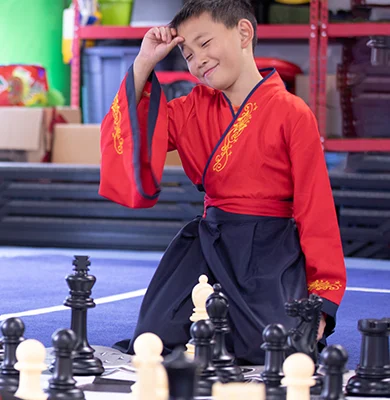
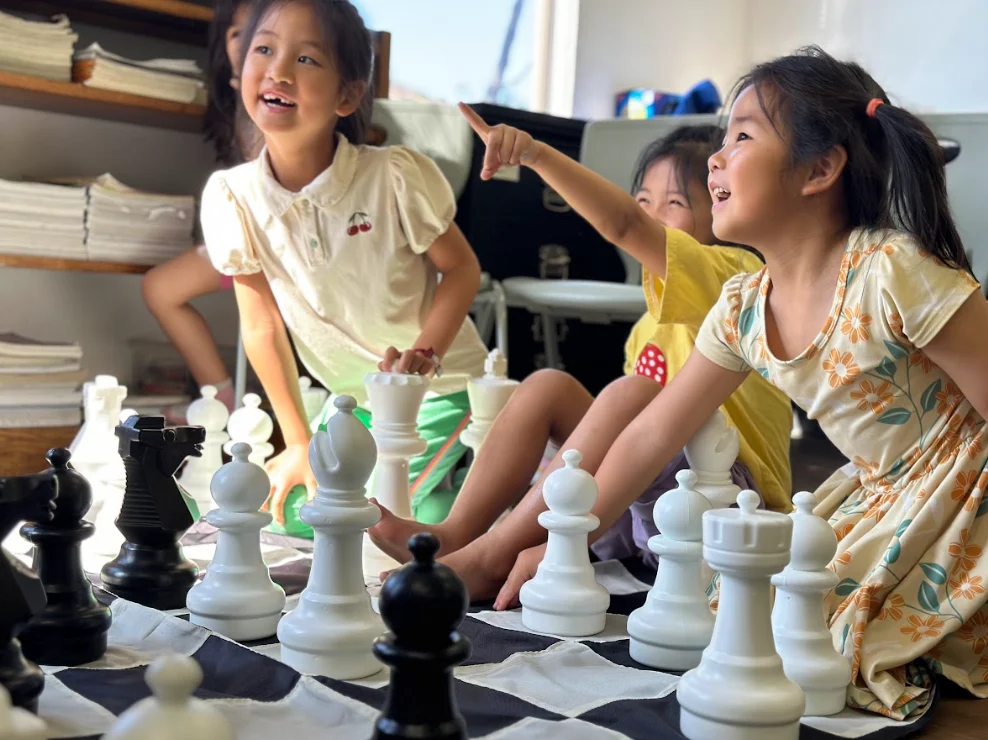
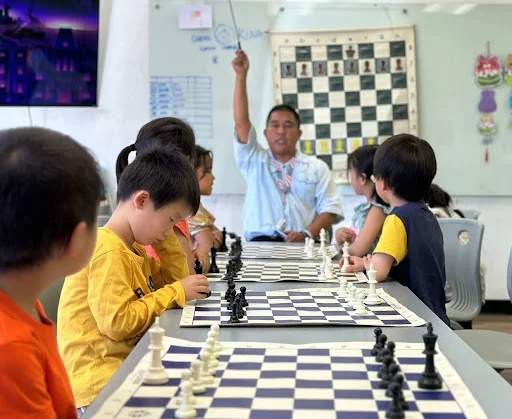
Our Approach to Chess: Learn chess concepts and strategies. Practice different strategies with fun chess activities, such as our exciting Team Chess Puzzle Competitions, Giant Chess, and 4-player Chess! Compete against other students in mini tournaments.
Bring out the Strategist Within:Enroll today, and get your mental gears turning through the strategic game of chess!